
To be added...
Keynote Speaker-ICCAE 2026

Xinghuo Yu, Professor (FAA, HonFIEAust, FIEEE)
RMIT University, Melbourne, Australia
Biography: Xinghuo Yu is an Associate Deputy Vice-Chancellor and Distinguished Professor at RMIT University (Royal Melbourne Institute of Technology), Melbourne, Australia. He served as the President of IEEE Industrial Electronics Society in 2018 and 2019.
Professor Yu is a Fellow of Australian Academy of Science, an Honorary Fellow of Engineers Australia, and a Fellow of the IEEE, Australian Computer Society and Australian Institute of Company Directors.
His research focuses on control systems engineering, intelligent and complex systems, and power and energy systems. He received numerous prestigious awards, including 2018 MA Sargent Medal from the Institution of Engineers Australia and 2013 Dr.-Ing. Eugene Mittelmann Achievement Award from IEEE Industrial Electronics Society.
Professor Yu’s work has garnered over 58,000 Google Scholar citations, with an H-index of 115. He has been recognized as a Clarivate’s Highly Cited Researcher in Engineering for ten consecutive years from 2015 to 2024.
Speech Title: AI and Machine Learning in Cyber-Physical Systems: Challenges and Opportunities
Abstract: Cyber-Physical Systems (CPSs) encompass a wide class of complex engineered systems that tightly integrate physical processes with information and communication technologies for sensing, control, optimisation, planning, and management. As CPSs continue to grow in scale, complexity, and autonomy, Artificial Intelligence (AI) and Machine Learning (ML) are emerging as powerful enabling technologies to complement traditional model-based approaches and enhance system performance.
This talk explores how AI and ML can be leveraged to improve the efficiency and effectiveness of modelling, control, and optimisation in CPSs. We begin by examining the fundamental principles of AI and ML from a systems and control perspective, highlighting both their potential and their limitations when applied to safety-critical and real-time environments. We then discuss emerging paradigms that move beyond current CPS and AI/ML frameworks, aiming to better address the inherent spatial and temporal complexities of large-scale, networked systems.
The discussion is grounded in real-world case studies, including the use of AI and ML for detecting money-laundering networks, and the application of generative AI and large language models to enhance control-room operations in smart grids. Through these examples, the talk illustrates how learning-enabled approaches can be effectively integrated with control and systems engineering methodologies to support the development of intelligent, reliable, and scalable CPSs.
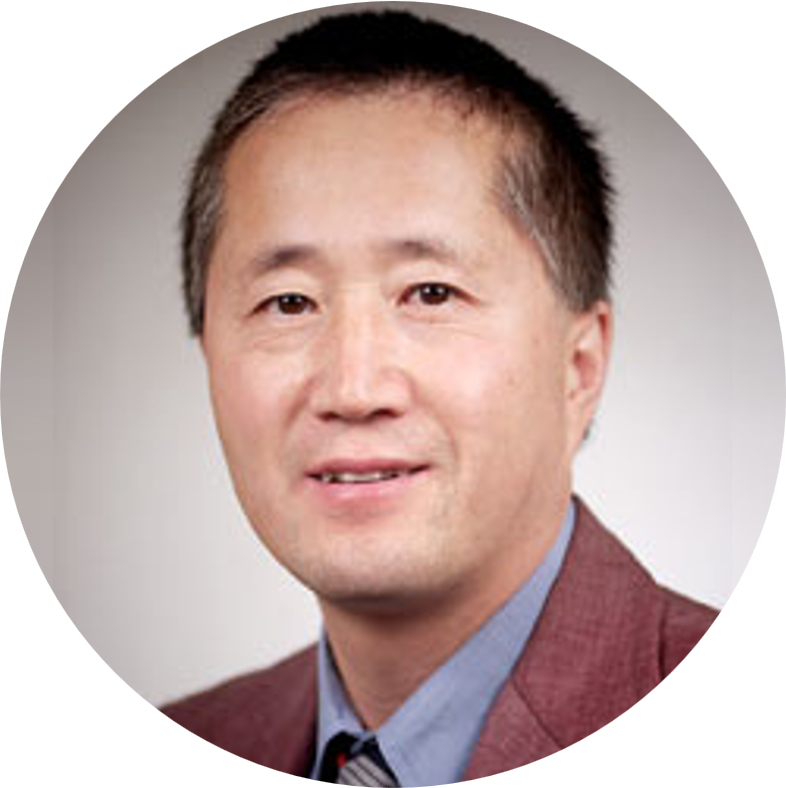
Peng Shi, Professor (FIEEE, FIET, FIEAust)
The University of Adelaide, Australia
Biography: Peng Shi is now a Distinguished Professor at the School of Electrical and Mechanical Engineering, and the Director of Advanced Unmanned Systems Laboratory, and Cyber-Physical-Human Systems Laboratory, at Adelaide University, Australia. His research interests include systems and control theory and applications to autonomous and robotic systems, cyber-physical systems, and multi-agent systems. His accolades include the Lotfi Zadeh Pioneer Award (2025), Nobert Wiener Outstanding Contribution Award (2024), and the Meritorious Service Award (2023) all from IEEE SMC Society; the Annual Scientific Award (2024), and Ramesh Agarwal Life-time Achievement Award (2023) all from the International Engineering and Technology Institute; the MA Sargent Medal from Engineers Australia (2022); the Honor of Life-time Achiever Leaderboard and Field Leader from The AUSTRALIAN Research Review (2019-2024); and the Recognition of Highly Cited Researcher from Clarivate (2014-2025). Currently he serves as the Editor-in-Chief of IEEE Transactions on Cybernetics, a Senior Editor of IEEE Access, and an associate editor of Automatica, and IEEE Transactions on Artificial Intelligence. His professional services also include as the President of International Academy for Systems and Cybernetic Sciences (2021-2024), Vice President of IEEE SMC Society (2021-2022), and IEEE SMC Society Distinguished Lecturer (2024-2026).
He is a Fellow of Australian Academy of Technological Science and Engineering, a Fellow of IEEE, IET and IEAus, and a Member of the Academy of Europe.
Speech Title: Making Multi-Agent Systems Collaborate: From Consensus to Control
Abstract: Multi-agent systems (MAS) are characterized by communication, coordination, and collaboration, enabling groups of agents to achieve common—and often challenging—objectives more effectively and efficiently than individual agents. Three core research topics in MAS are consensus, flocking, and formation control. Consensus concerns the ability of agents to reach agreement through local interactions and serves as a fundamental building block for cooperative behaviors. Flocking (or swarming) is a self-organizing phenomenon inspired by animal groups, where simple local rules give rise to collective intelligence and improved system robustness. Formation control aims to drive multiple agents into desired geometric patterns that may be scalable, reconfigurable, or time-varying. In this talk, we present modeling, analysis, and the design of distributed control schemes for consensus and formation control. Simulation results and experimental demonstrations are provided to illustrate the effectiveness and practical potential of the proposed design techniques.

Angel P. del Pobil, Professor
Jaume I University, Spain
Biography: Angel P. del Pobil is a Full Professor of Computer Science and Artificial Intelligence at Jaume I University (Spain), where he is the founding director of the UJI Robotic Intelligence Laboratory. He was a Visiting Professor at Sungkyungkwan University, Korea (2009-2021). He holds a B.S. in Physics and a Ph.D. in Industrial Engineering, both from the University of Navarra. He has been Co-Chair of two Technical Committees of the IEEE Robotics and Automation Society and is a member of the Governing Board of the Intelligent Autonomous Systems (IAS) Society (2012-present) and EURON (European Robotics Research Network of Excellence, 2001-2012). He has over 340 publications, including 14 books, three of them published by Springer: Robot Physical Interaction through the combination of Vision, Tactile and Force Feedback; Robust motion detection in real-life scenarios; and The Visual Neuroscience of Robotic Grasping. Prof. del Pobil was co-organizer of over 65 workshops and tutorials in major conferences in robotics and AI. He was Program Co-Chair of the 11th International Conference on Industrial and Engineering Applications of Artificial Intelligence, General Chair of five editions of the International Conference on Artificial Intelligence and Soft Computing and General Chair of the International Conference on Simulation of Adaptive Behaviour. He is often Associate Editor for IEEE ICRA, IROS, RO-MAN, and ICDL conferences and has served on the program committees of over 240 international conferences, such as IJCAI, ICPR, ICRA, IROS, IAS, ICAR, etc.
Prof. del Pobi award-winning research in the last 38 years, includes contributions to humanoid robots, service robotics, internet robots, motion planning, mobile manipulation, visually-guided grasping, robot perception, robot physical and human interaction, robot learning, developmental robotics, and the interplay between neurobiology and robotics. He was a Distinguished Lecturer of the IEEE Robotics and Automation Society (2019-2024) and has presented 80 invited lectures at events around the world, including 13 plenary speeches at international conferences.
Speech Title: Robot AI and Human Safety
Abstract: Responsible AI is nowadays a major concern for researchers and practitioners in the field. In particular, physical AI in robotic systems is by its own nature prone to catastrophic risks in terms of physical damage to property, personal injury, or even death. I will discuss the nature of these risks in the context of state-of-the-art robotic intelligence and the present dominant paradigm in AI, drawing some conclusions based on results from our lab.

Ljiljana Trajkovic, Professor (IEEE Life Fellow)
Simon Fraser University, Canada
Biography: Ljiljana Trajkovic received the Dipl. Ing. degree from University of Pristina, Yugoslavia, the M.Sc. degrees in electrical engineering and computer engineering from Syracuse University, Syracuse, NY, and the Ph.D. degree in electrical engineering from University of California at Los Angeles. She is currently a professor in the School of Engineering Science, Simon Fraser University, Burnaby, British Columbia, Canada. Her research interests include communication networks and dynamical systems. Dr. Trajkovic served as IEEE Division X Delegate/Director, President of the IEEE Systems, Man, and Cybernetics Society, and President of the IEEE Circuits and Systems Society. She serves as Editor-in-Chief of the IEEE Transactions on Human-Machine Systems. She is a Distinguished Lecturer of the IEEE Systems, Man, and Cybernetics Society and was a Distinguished Lecturer of the IEEE Circuits and System Society. She is a Fellow of the IEEE.
Speech Title: Data Mining and Machine Learning for Analysis of Network Traffic
Abstract: Collection and analysis of data from deployed networks is essential for understanding communication networks. Hence, data mining and statistical analysis of network data have been employed to determine traffic loads, analyze patterns of users' behavior, predict future network traffic, and detect traffic anomalies. The Internet has historically been prone to failures and attacks that significantly degrade its performance, affect the Internet connectivity, and cause routing disconnections. Frequent cases of various cyber threats have been encountered over the years and, hence, detection of anomalous behavior is a topic of great interest in cybersecurity. In described case studies, traffic traces collected by various collection sites are used to classify network anomalies. Various anomaly and intrusion detection approaches based on machine learning have been employed to analyze collected data. Deep learning, broad learning, gradient boosted decision trees, and reservoir computing algorithms were used to develop models based on collected datasets that contain Internet worms, viruses, power outages, ransomware events, router misconfigurations, Internet Protocol hijacks, and infrastructure failures in times of conflict. The reported results indicate that while performance of machine learning models greatly depends on the used datasets, they are viable tools for detecting the Internet anomalies.